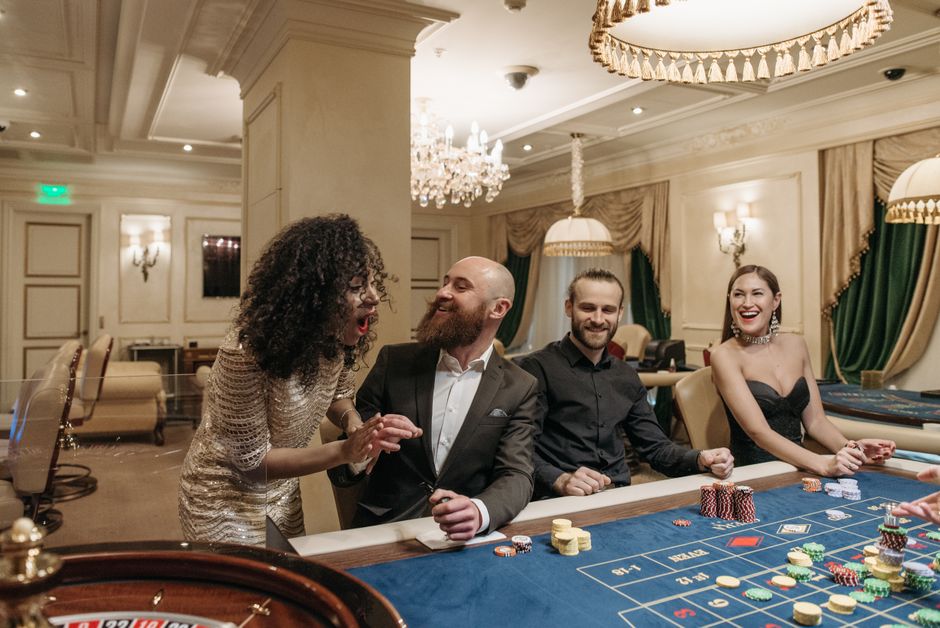
Every casino floor tells the same quiet joke: the carpet is loud, the odds are not. Walk past the $10 blackjack tables at 2 a.m. and you'll see two kinds of players — the ones chasing a loss and the ones who already decided, before they sat down, exactly how much they were willing to lose. Only one of those groups tends to come back next weekend. That difference is the whole game, and it has almost nothing to do with luck.
Strip away the neon and the free drinks, and every iGaming product is a math equation wearing a costume. That equation is called the house edge, and it's the single most useful number a player can learn.
Here's how it works in practice:
That last point is why poker attracts a different breed of player. In poker, you're not betting against the house. You're betting against the person across the table who just called a three-bet with 7-2 offsuit. That's a very different — and much more beatable — opponent.
Let's be honest about slots. They're the engine of the entire iGaming industry, generating somewhere between 70% and 80% of casino revenue in most regulated markets. They're also the least understood product by the people who play them most.
A few things worth knowing:
The slot players who last are the ones who pick games matching their bankroll and personality. Someone who gets bored in 20 spins should never touch a 10,000x-max-win megaways title. If you want to dig deeper, บาคาร่า is worth a look.
Sports betting is where recreational players most often confuse themselves. The trap is thinking the goal is to predict winners. It isn't. The goal is to find prices that are wrong.
Bookmakers build a margin into every market. On a standard two-way market, you'll see odds like -110 and -110, which implies about a 52.4% chance for each side — adding up to 104.8%. That extra 4.8% is the vig, and it's how the book profits regardless of the result.
So the real question isn't "will the Chiefs win?" It's "are the Chiefs fairly priced at -140, or should they be -120?" If you consistently bet into prices that are 3-4% worse than fair, no amount of hot-streak handicapping saves you. If you consistently find 3-4% value, you win long term even with a 48% strike rate.
A few practical habits that separate sharp bettors from the rest:
If you're going to invest serious time into any iGaming discipline, make it poker. It's the only mainstream casino game where a skilled player has a measurable, repeatable edge over the field.
But the modern poker ecosystem is tougher than it was in 2008. The fish are fewer, the regs are better, and solvers have raised the technical floor dramatically. To compete online today, you need at least the basics of range construction, pot odds, and position. Sitting down without those is like entering a chess tournament having only played checkers.
Where the softer games still exist:
Even in tougher games, a disciplined player with solid fundamentals can grind out a modest win rate. That's more than you can say for slots.
Here's the uncomfortable truth: most people who lose at iGaming don't lose because they're unlucky. They lose because they bet amounts that made survival mathematically impossible.
A sane framework looks something like this. For slots, never bet more than 1% of your session bankroll per spin — a $200 bankroll means $2 spins, not $20. For sports betting, flat-stake 1-2% of your total bankroll per bet, and never chase losses with double-ups. For poker cash games, buy in for 100 big blinds and never sit with more than 5% of your total roll on the table at once.
Boring? Absolutely. But the players who follow those rules are still there in month six, and the ones who don't have already reloaded three times.
iGaming isn't rigged — it's priced. The casino, the bookmaker, and the poker room all build their profit into the structure of the game, and they don't need to cheat you to get it. That's actually good news, because it means you can make informed choices instead of hoping for a miracle.
Play slots for entertainment, with money you'd spend on a concert ticket. Bet sports when you've done the work to find a real edge. Take poker seriously if you want the rare chance to be the house. And no matter which door you walk through, know your number before the cards come out. The carpet is loud. Your math should be louder.